The Earth Spins
When we were very young the world seemed too extraordinary to actually be reality. We were awed by the common. I mean, we just couldn’t believe that trees could grow for hundreds or even thousands of years, that honey came from bees, that milk came from cows, that the moon causes waves, that shooting stars are space rocks falling to the ground, that the earth spins once a day, that no snowflake is alike, that shells are made by animals, and that our baby sister can recognize our voice from when she was in the womb.
But what we now know as a fact, sadly, we find next to no wonder in. For the most part it’s common, it’s mundane.
The Wonder That is our World
This is the whole reason we invent stories, other worlds, fairytales; to feel again what we felt when the world was new and magical. As we discover these made up worlds and fairytales it reawakens in us what we felt when we were first introduced to our world. When we first discovered the wonder that is our world. Ents help us remember that we have trees, our own giants, living growing things, that have stood for many men’s lives, telling the history of earth and sky.1
Tiny Earth
Another way to see the world like we did at first is to go to space.
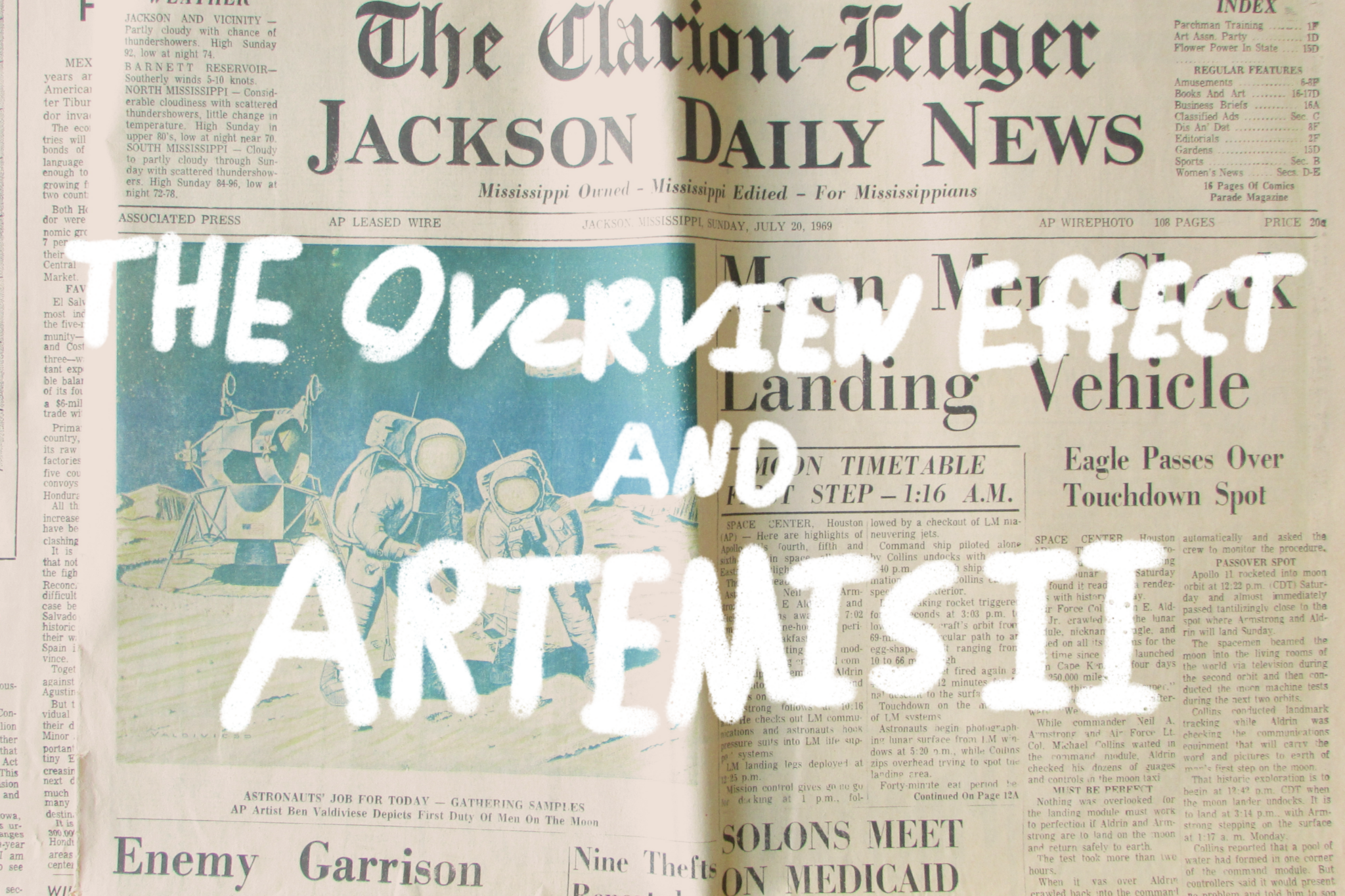
Many people have called it the Overview Effect.
“Researchers have characterized the effect as “a state of awe with self-transcendent qualities, precipitated by a particularly striking visual stimulus”.[3] The most prominent common aspects of personally experiencing the Earth from space are appreciation and perception of beauty, unexpected and even overwhelming emotion, and an increased sense of connection to other people and the Earth as a whole.”2
I feel like this fits with the Artemis II mission and the astronauts’ responses on coming back home.3 And I feel like we can experience this overview effect, secondhand, from the footage and pictures being brought back as well as the astronauts’ own words. Such as what Artemis II Astronaut Christina Koch said when she came back home, “What struck me wasn’t just Earth. It was all the blackness around it, earth was just this lifeboat, hanging, undisturbingly, in the universe.” It fills us with awe.
I’ve thought (as I’m sure many others have!) of what it must be like in their shoes, how they look at waves at the beach, how they must think of the air we breath, and how they can’t look at the moon the same way, especially with a crater named Carroll.
I don’t know about you, but I enjoyed keeping up with the Artemis II mission last month and the extraordinary images Nasa and the crew were posting. It has filled me with awe. To be able to walk outside in the evening and see a half moon against a blue sky. You look at it differently when you realize that at the moment you are looking at the moon, people are traveling to it, and it has taken them days and they still haven’t reached it yet. And then to think of all the places on earth so remarkable and varied; the Caribbean islands, the Arctic, the deserts of Saharan the Mojave, the mountains of Asia, the rainforests of Papua New Guinea and the Amazon, The coast of the Mediterranean Sea, The Serengeti…All on the Same Planet!!
I think it’s an astounding thought.
Amaze, Amaze, Amaze
Obviously we were made for beauty. We have a built in hunger for ‘a state of awe with self-transcendent qualities’, but these vistas don’t fill us; they leave us thirsting for more than we did before, hungering for a greater and still higher beauty. We have a hole in us that must be filled with beauty, and nothing will fill it except God. So I would be amiss if I did not say that just as fairytales point to the beauty of creation so creation points to the beauty of Christ.4 This opens up a lot of doors of thought but one of them is this: that God made us to be happy, to be satisfied. I’ll end with this, amaze, amaze, amaze.
“We all like astonishing tales because they touch the nerve of the ancient instinct of astonishment. This is proved by the fact that when we are very young children we do not need fairy tales: we only need tales. Mere life is interesting enough. A child of seven is excited by being told that Tommy opened a door and saw a dragon. But a child of three is excited by being told that Tommy opened a door. Boys like romantic tales; but babies like realistic tales–because they find them romantic. In fact, a baby is about the only person, I should think, to whom a modern realistic novel could be read without boring him. This proves that even nursery tales only echo an almost pre-natal leap of interest and amazement. These tales say that apples were golden only to refresh the forgotten moment when we found that they were green. They make rivers run with wine only to make us remember, for one wild moment, that they run with water.” C.K. Chesterton, Orthodoxy